And why age doesn’t always make a wine better!
Everyone knows old wines are better, right? The longer a wine sits in its dark cave, the bottle slowly gathering dust, the more delicious that wine will be when we drink it, right? Wrong! Obviously, the fundamental reason for ageing wine is to make it taste even better. Or rather to allow the flavors to develop so that this wine tastes as good as this wine could possibly ever taste.
However, the key is “as good as this wine could possibly ever taste.” And for some wines, that means not ageing them. They were meant to be drunk young and fresh, and leaving the bottles to sit in a dark cave will only decrease their deliciousness.
How am I supposed to know what to age?
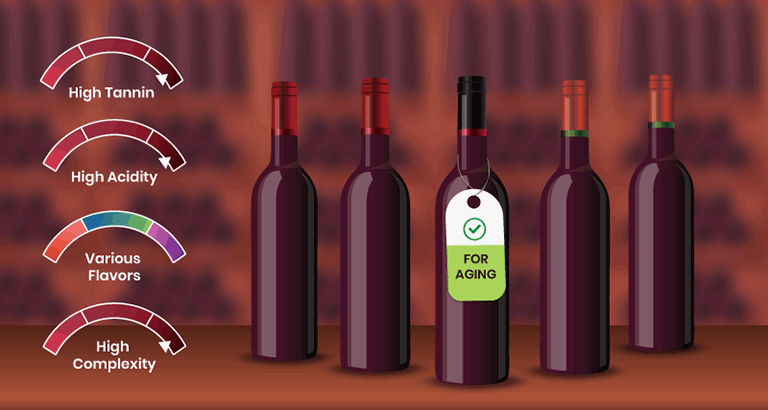
An excellent question. To answer this question we need to understand the process that an ageing wine undergoes and the ultimate goal of that process. Then when we are selecting wines for ageing, we know which wines will benefit from the process and which wines will not improve.
What is happening?
As a wine sits, the chemical composition of the wine is changing. The color particles start to drop out, forming a sediment on the bottom of the container. The tannins (the element in wine that makes your mouth feel dry) progressively become softer. The flavors evolve and change - fruit flavors become riper and, if the wine was aged in wood before bottling, the wood characteristics and the fruit characteristics become better integrated and more harmonious.
Why do I want this to happen?
Again, the ultimate goal is to make the wine taste as good as it possibly could. To show off our wine at its best. The flavors will blend together in a way that is pleasant, not harsh. The wine will not be so dry that it makes you feel as if you had a mouth full of cotton. Neither will it be aged too long, so that the fruit flavors become dry, dull, and faded. A wine that is properly aged will feel balanced and in harmony.
Choosing a wine for ageing

Since we know that ageing means chemical changes in the wine, we want to choose wines for ageing whose chemical composition is hardy enough to benefit from these changes. This means looking at several elements:
1. Tannin
A high level of tannin is one of the main reasons for ageing a wine. Wines that are high in tannin when they are young can be extremely drying when drunk - they feel harsh, astringent, and puckery in the mouth. During ageing the tannins start to fall out of the wine and those that remain are softer, giving structure to the wine but without an unpleasantly harsh feeling. Tannin levels are generally much higher in red wines than in whites, which is why ageing is often more associated with reds, such as Cabernet Sauvignon.
2. Acid
Acid is a preservative and helps to stabilize the wine during ageing. Wines without a sufficiently high level of acid become flat, dull, and lose their flavor if aged for too long. White wines generally have sufficient acid but lack the tannin necessary for ageing. However, tannin is also present in wood, so white wines that have spent some time in wood during the winemaking process may also benefit from ageing. Many oaked Chardonnays are famous for their ageing potential.
3. Flavor
Wines with complex and varied flavors hold up best under ageing. Wines with only two or three fruit flavors tend to lose their vibrancy with ageing. They taste old, tired, dull, and generally unpleasant. Such a wine, for instance a light Pinot Grigio, is best drunk when it is young and fresh and lively. The more powerful wines with many flavors, especially those combining fruit flavors with wood influence from spending some time in barrel, can benefit from ageing because this gives all the flavors a chance to blend together and influence each other. A wine with complex flavors will be more balanced after ageing once all the flavor elements learn to play nicely together.
The more complex a wine, the more likely it is to age well
Choose a wine that is complex, powerful, and perhaps a bit harsh in its youth to enjoy its transformation into a rich, flavorful, well balanced, and interesting experience.