Wolfberger
Sec, Demi-Sec, Moelleux: Alsace Whites at the Asian Table
From steamed fish to Peking duck and coconut curry, find your glass among Wolfberger's whites and Lucien Albrecht's Grand Cru Riesling.
Asia's home for great wine

Editorial
A family rooted in Orschwihr, a pioneer of Crémant and a Riesling named for its hillside: discover Lucien Albrecht.
Balthazar Albrecht moved from Thann to Orschwihr in 1698. By 1827, the family was cultivating plots in the village, and its vineyard holdings expanded through the nineteenth century. Eight generations have worked these soils. The house bears the name of Lucien, born in 1930, while its roots reach back to Balthazar.
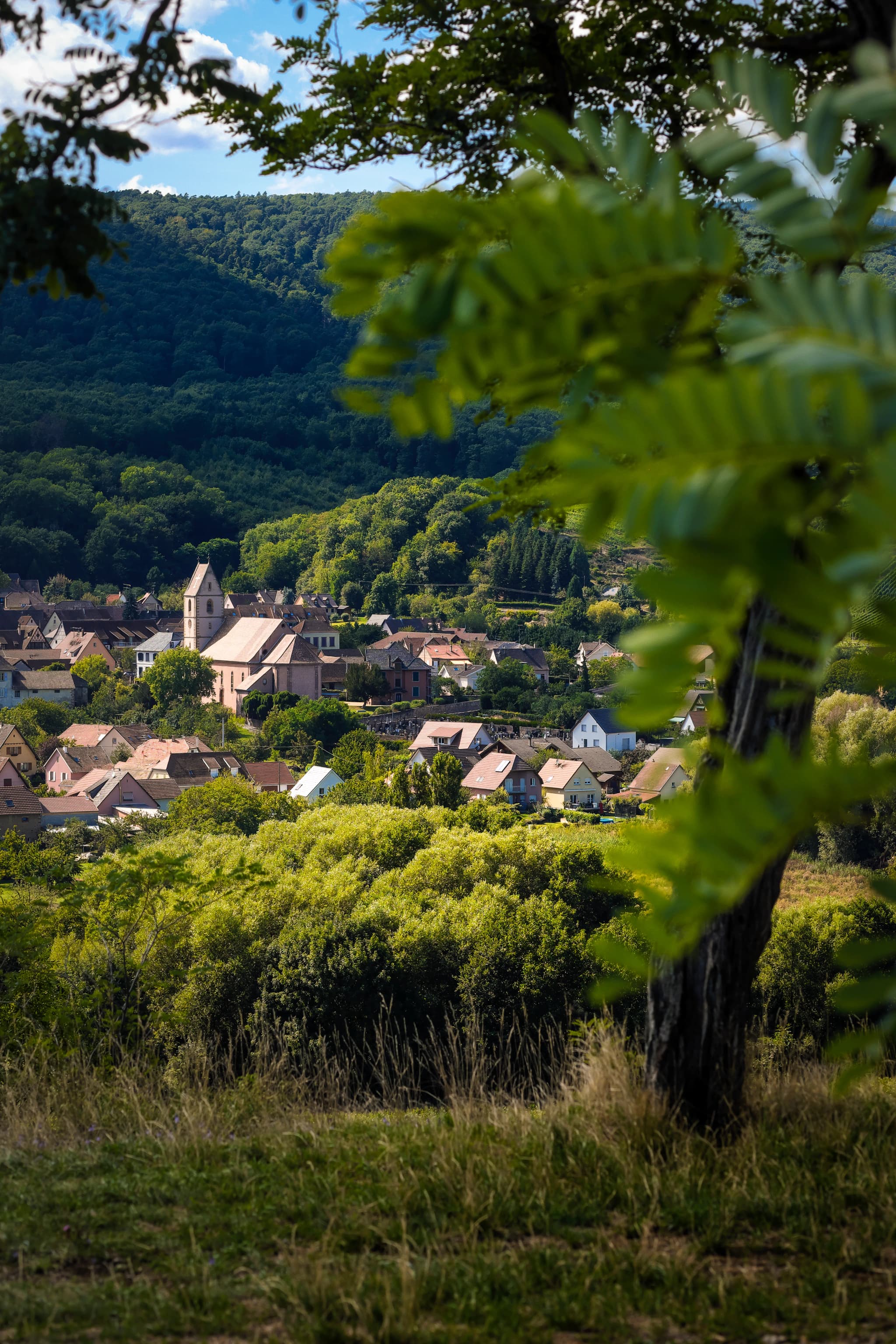
To meet Lucien Albrecht, begin with Orschwihr and the hills around it. The family name is rooted in these vineyards and carried forward on every label. As you explore the house, that village offers a thread to follow from an old vineyard story to the bottle you choose today.
Around the time of Lucien's birth, Henri Albrecht was replanting after phylloxera. He chose grafted Riesling, Gewurztraminer and the grape then called Tokay in Alsace. The family's work involved rebuilding as well as expanding: a vineyard had to be renewed if it was to carry the house forward.
Those choices connect the family story with grapes that still help define its range. Riesling and Gewurztraminer remain familiar names to anyone exploring Alsace, while the older Tokay name recalls another chapter in the region's wine history. The continuity lies in tending and renewing the vineyards through each generation.
Bollenberg stands apart from the Vosges, south of Rouffach, catching sun throughout the day. Nearby Pfingstberg faces south-east, its steepest ground shaped into terraces. A small valley separates the two. These are distinct places around the same village, each asking growers to know their land closely.
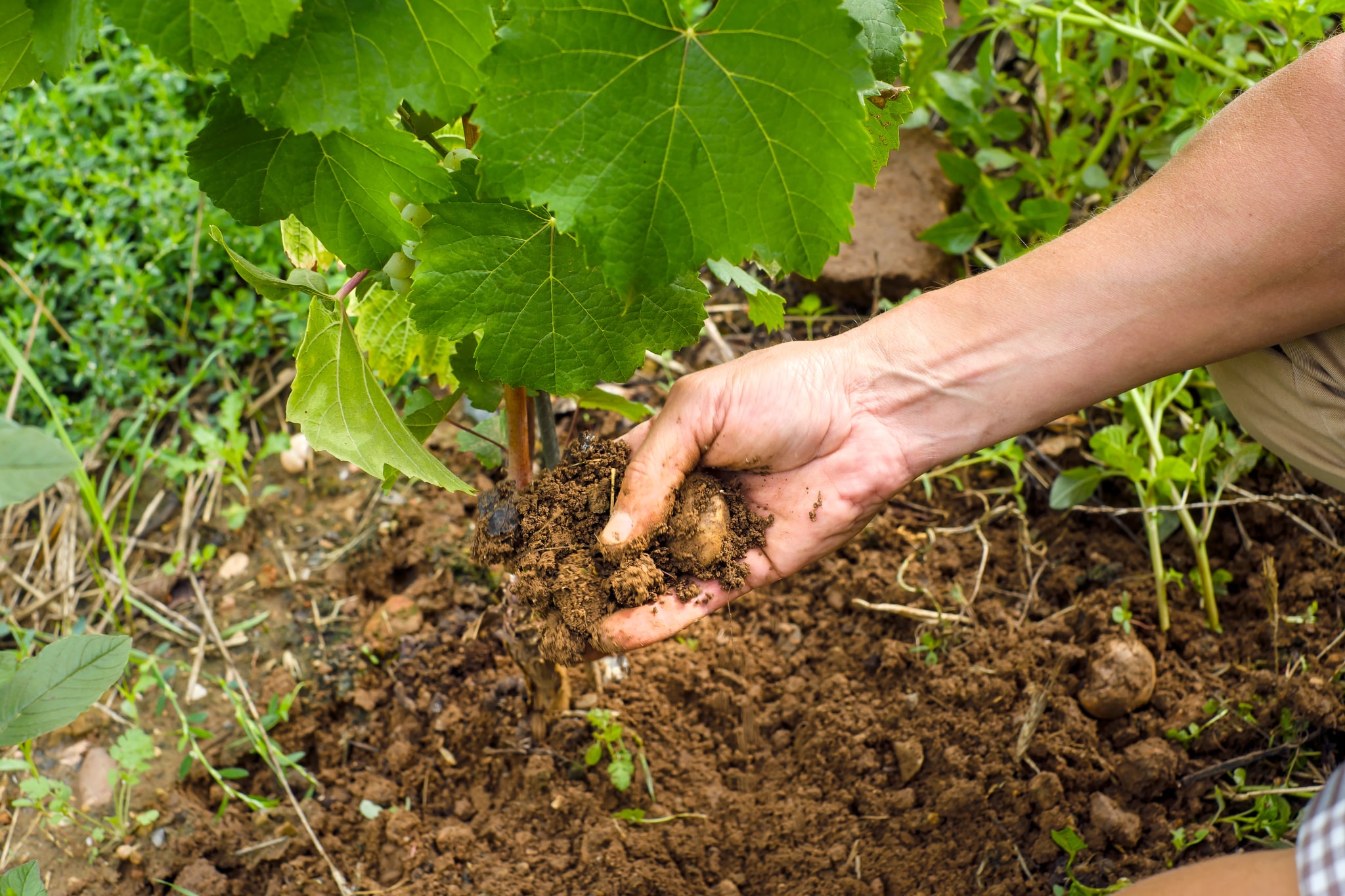
On the Pfingstberg, the ground changes as the slope rises: marl, limestone and sandstone, with lighter soils above and sandy clay below. Terraces give the steep ground a human shape. It is a landscape to explore slowly, giving each vineyard name a place in your imagination and a presence in the glass.

Lucien Albrecht began sparkling trials in 1971 and worked with other producers towards the recognition of Crémant d'Alsace five years later. The bubbles come from a second fermentation in the bottle, a separate craft alongside the house's still wines.
That early work made the house one of the pioneers of the style. Wine, yeast and sugar begin the bottle fermentation that creates the sparkle. For a house rooted in vineyards, it opened another way to turn the harvest into wine, adding a new chapter to a history already measured in generations.
Relaunched in 2012, Lucien Albrecht signs its labels 'Grands Vins d'Alsace'. Still wines, Grands Crus and Crémants offer different ways to explore the house today. Its sister house is Wolfberger, whose Caveau in Orschwihr welcomes visitors to taste Lucien Albrecht's wines.
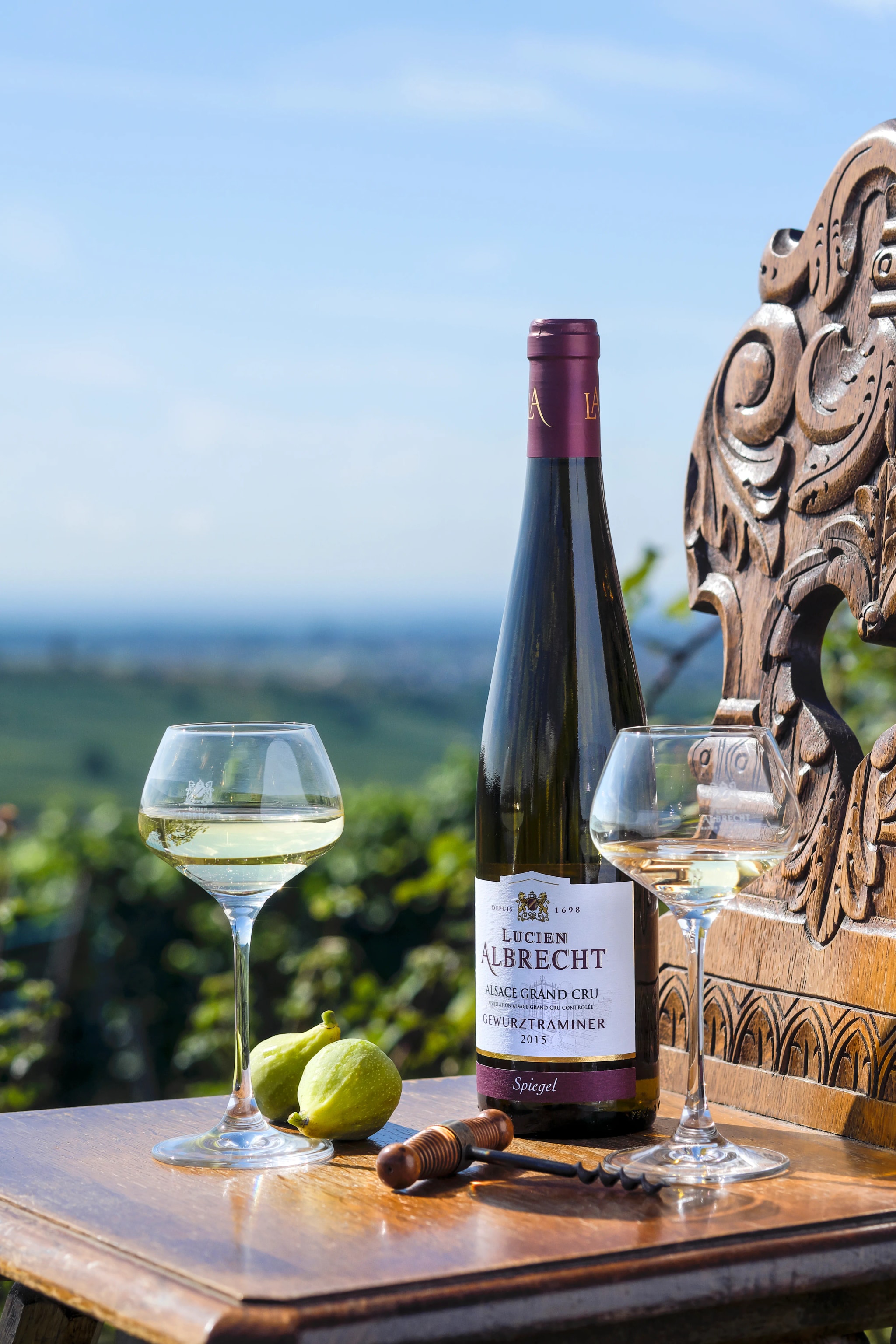
Riesling Grand Cru Ollwiller brings that exploration to a particular vineyard in Wuenheim, below Vieil-Armand, around the château that gives it its name. It is a different site from the hills around the family's home village. Riesling identifies the grape; Ollwiller takes you to the place.
Among Alsace's 51 Grand Cru sites, Ollwiller gives this Riesling its own address in the landscape. You can come to it through a love of the grape, then stay for the place. The bottle makes that next step inviting: a chance to give one hillside your attention before exploring further.

A tasting in Orschwihr can be the moment a wine name becomes part of your own story. Leave time for the Caveau, for a question you have wanted to ask, and for a glass chosen at your own pace.
Until that journey comes, there is another way to begin. Set a bottle of Ollwiller on the table with someone you would like to take along. Let the evening be an invitation: to the house, to the village, and eventually to the hills beyond it.
From steamed fish to Peking duck and coconut curry, find your glass among Wolfberger's whites and Lucien Albrecht's Grand Cru Riesling.

From a first glass to a Grand Cru bottle, find a place for Wolfberger and Lucien Albrecht on an Asia-Pacific wine list.

From the Eguisheim cooperative to Collection Signature, discover the people, parcels and wines behind Wolfberger.