
How to Taste Wine and Train Your Palate
Explore the art of wine tasting and learn how to observe, smell, and taste like a professional. Understand how each sense reveals the balance, structure, and quality of a wine.
Asia's home for great wine
An in-depth look at the wineries shaping modern Chinese wine, highlighting estate leadership, terroir understanding, and the regions defining today’s quality-driven landscape.
In China, wineries play a role that extends far beyond brand recognition. Because many wine regions face extreme climatic conditions, complex logistics, and a relatively short modern history, estate leadership has been decisive in translating viticultural potential into consistent, credible quality.
Earlier pioneers such as Grace Vineyard in Shanxi established the family-estate model that later regions would refine and scale, laying the groundwork for today’s quality-driven Chinese wine landscape.
Rather than defining excellence through rankings or scale, this article explores how a small number of representative estates have shaped regional identities through terroir understanding, technical precision, and long-term vision. Together, they illustrate the transformation of Chinese wine from industrial production toward estate-driven quality.
Ningxia offers the clearest example of estate-led regional development in modern Chinese wine. Along the eastern foothills of the Helan Mountains, wineries committed early to low yields, parcel selection, and disciplined vineyard management in an arid continental climate.
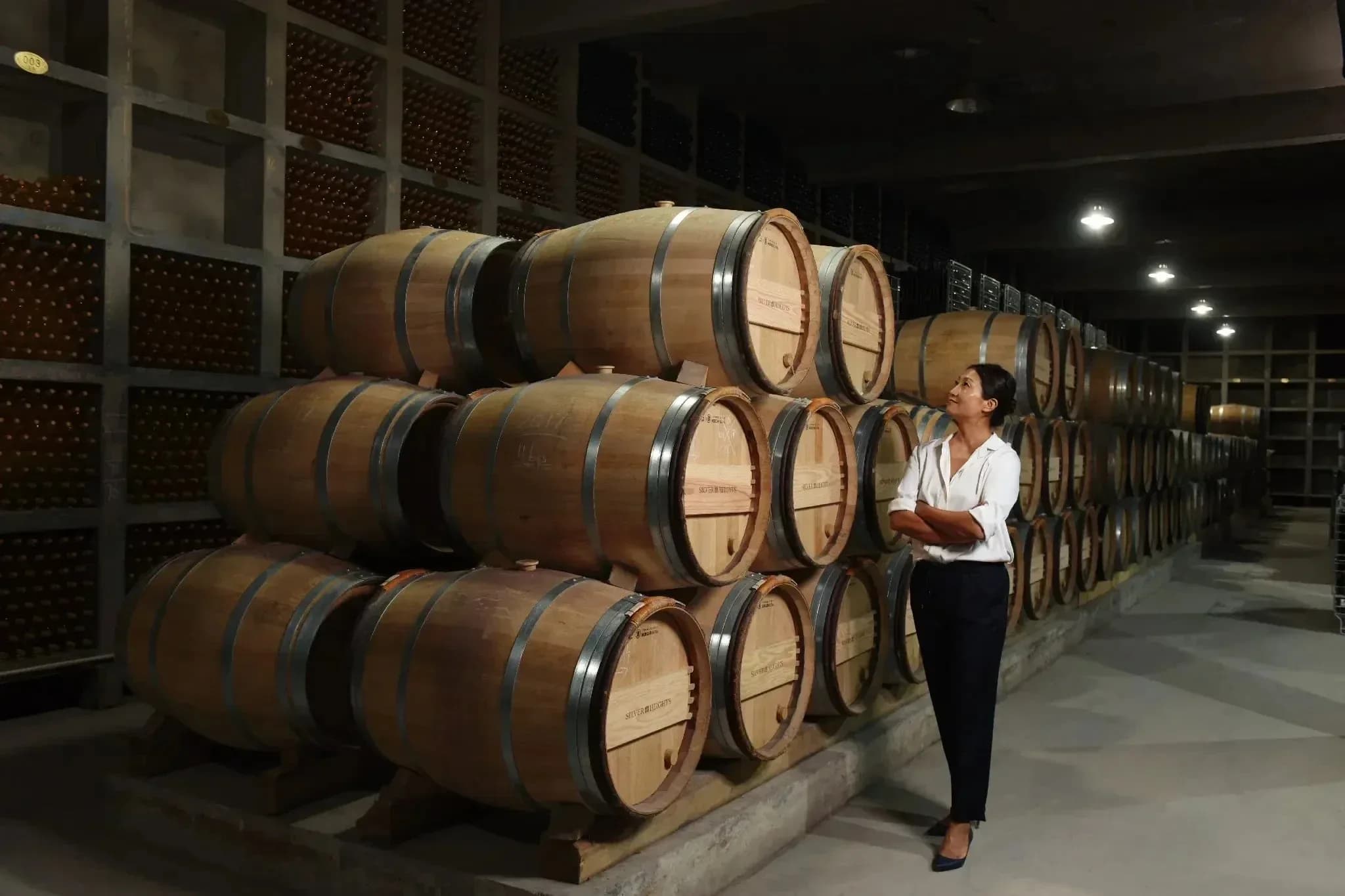
Silver Heights represents the boutique origin of this movement. As a family-run estate, it helped redefine expectations through biodynamic farming and meticulous winemaking. Its flagship, The Summit blend, demonstrated that Ningxia could produce structured, age-worthy Cabernet-based wines with balance and mineral tension.
At the opposite end of the scale, Xige Estate embodies the future of Ningxia. Operating at a significant scale while maintaining boutique-level quality control, Xige has shown that size does not preclude precision. Through rigorous vineyard zoning, modern cellar practices, and restrained styling, it has become a reference for how large estates can contribute positively to regional identity.
Changyu Moser XV plays a different but equally important role. As a collaboration between China’s oldest wine company and European expertise, it represents the successful pivot of the historical industry toward terroir-driven fine wine. Its presence bridges China’s industrial past with its quality-focused future.
Together, these estates demonstrate that Ningxia’s credibility rests not on a single model, but on the coexistence of boutique vision, scaled precision, and institutional transformation.
In Hebei, the most relevant reference point for quality-driven wine is Domaine Franco-Chinois. Established with strong French technical influence, the estate played a foundational role in introducing modern viticulture and winemaking standards to the region.
Its most lasting contribution has been the development of Marselan, a variety particularly well suited to Hebei’s conditions. Through careful site selection and disciplined farming, Domaine Franco-Chinois demonstrated that Marselan could deliver deeply coloured, aromatic wines with balance and freshness, helping establish it as one of China’s signature modern grapes.
The estate’s importance lies less in scale and more in methodology. It showed that precision, rather than volume, could define regional identity in northern China.
Shandong’s humid, maritime climate presents some of the most demanding viticultural conditions in China. Disease pressure, summer rainfall, and long growing seasons require exceptional canopy management and harvest timing.
Longting Vineyard has emerged as the region’s most technically focused estate. Known for its work with Petit Manseng and Marselan, Longting has demonstrated that Shandong can produce serious, age-worthy wines despite climatic constraints. Its approach emphasises airflow, yield control, and restrained winemaking to preserve freshness and structure.
Longting’s success has been critical to repositioning Shandong from a historical volume centre to a region capable of producing refined, coastal-influenced fine wines.
Yunnan represents a fundamentally different estate model. Vineyards are fragmented across villages and elevations, often at extreme altitudes, making centralised farming impossible.
Ao Yun remains the most emblematic project in the region. By coordinating hundreds of small, high-altitude parcels near Shangri-La, the estate demonstrated that logistical complexity could be transformed into stylistic strength. Its Cabernet-based blends combine concentration with freshness, challenging assumptions about where fine wine can be produced in China.
In Yunnan, wineries act as coordinators of terroir rather than controllers of land. Close collaboration with growers, selective harvesting, and micro-vinification are essential, resulting in wines defined by aromatic lift, acidity, and site expression.
Xinjiang’s arid climate, low disease pressure, and irrigation from mountain snowmelt allow for both scale and experimentation. Here, wineries have focused on translating climatic advantage into stylistic diversity.
Tiansai Vineyards and Puchang Vineyard have led this approach, exploring a wide range of grape varieties, including Saperavi and Rkatsiteli, alongside more familiar international varieties. Their work demonstrates that Xinjiang can support structured, fresh wines across multiple styles when water management and harvest decisions are carefully controlled.
Across China, these wineries share a common trait. They prioritise understanding of terroir, technical precision, and long-term investment over rapid expansion or market spectacle.
Whether boutique or large-scale, family-run or institutionally backed, the estates shaping modern Chinese wine are those that contribute to persistent regional quality. For professionals and enthusiasts alike, they offer the most reliable compass for understanding China’s place on the global wine map.
Explore the art of wine tasting and learn how to observe, smell, and taste like a professional. Understand how each sense reveals the balance, structure, and quality of a wine.

New Latitude Wines are crafted outside the 30-50° wine belt. Discover how winemakers adapt to tropical heat and northern cold to create distinctive wines in emerging regions.

Master the essentials of wine cellaring: temperature, humidity, inventory, and selection to protect your wines and enjoy them at their perfect peak.