
How to Taste Wine and Train Your Palate
Explore the art of wine tasting and learn how to observe, smell, and taste like a professional. Understand how each sense reveals the balance, structure, and quality of a wine.
Asia's home for great wine

Thailand has emerged as one of the most technically innovative wine-producing countries. This guide explores its wine regions, climate adaptations, and distinctive tropical wine styles.
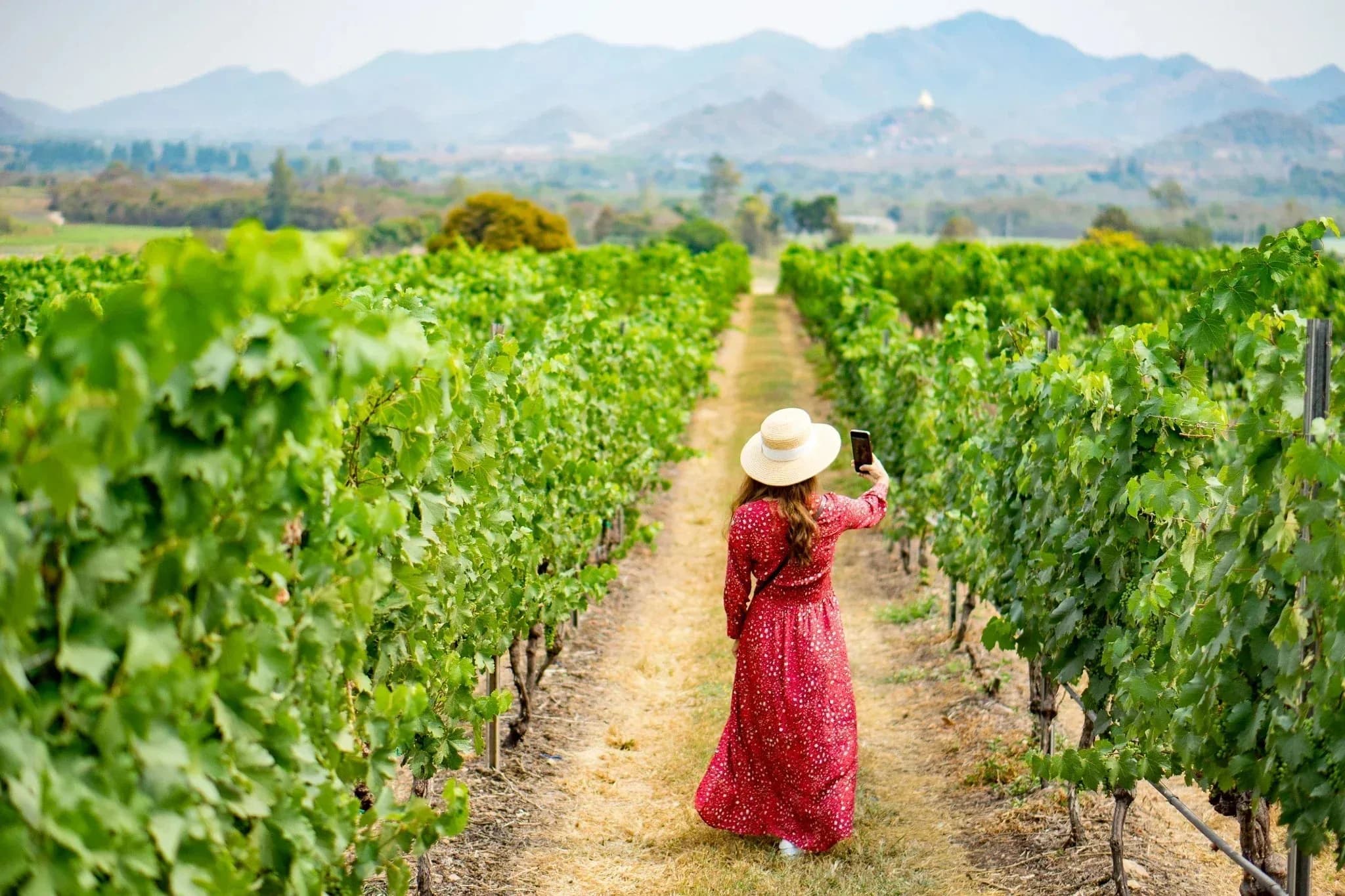
Thailand is not a traditional wine country, yet it has become one of the most technically intriguing examples of modern viticulture outside classical latitudes. Located between 5° and 20° north of the equator, the country sits within the tropical belt, where heat, humidity, and seasonal rainfall challenge nearly every conventional assumption of grape growing.
Wine consumption has historically played a limited role in Thai culture, which has favoured beer and spirits. Over recent decades, however, a small but determined group of producers has adapted viticultural practices to local conditions, transforming climatic constraints into a distinctive and increasingly coherent wine identity.
Today, Thailand is often cited as a reference point for new latitude wines. These wines are produced in climates once considered unsuitable for viticulture and rely on technical innovation, site selection, and adaptive vineyard management rather than inherited tradition.

Thailand’s principal challenges for wine production include persistent humidity, high fungal pressure, and the absence of a natural winter dormancy period for grapevines. Instead of following a European seasonal model, Thai producers commonly adopt double-pruning systems to regulate vine growth and deliberately shift harvests into the coolest and driest months of the year.
Most commercial harvests occur between January and March, when rainfall is limited and nighttime temperatures drop. In this context, elevation, air circulation, and soil drainage become decisive factors, often playing a more important role than latitude alone.
Thailand’s vineyards are generally grouped into four principal production zones. Each region is shaped by a specific combination of altitude, soil composition, and proximity to the sea, resulting in distinct growing conditions and wine styles.
Northern Thailand represents the country’s most continental wine-growing environment. Vineyards are typically located between 300 and 600 metres above sea level, where higher elevation and marked diurnal temperature variation help preserve acidity despite the tropical latitude.
Soils vary across production areas and include red clay as well as limestone mixed with gravel, offering essential drainage in humid conditions. These factors, combined with winter harvesting, allow producers to maintain balance and freshness in the finished wines.
The most widely planted grape varieties include Shiraz, Tempranillo, Dornfelder, and Durif. Wines from Northern Thailand tend to emphasise freshness, moderate alcohol levels, and restrained structure rather than power.

Khao Yai is Thailand’s most established and internationally visible wine region. Vineyards are situated between 300 and 550 metres above sea level, benefiting from slightly cooler growing conditions than those of the surrounding lowlands.
The region’s soils are predominantly red clay and limestone clay, contributing structure and water retention while remaining workable under tropical rainfall patterns. Khao Yai is home to several of the country’s most recognised producers and serves as a benchmark for Thai grape-based wines.
Shiraz and Tempranillo dominate red plantings, while Chenin Blanc and Colombard form the backbone of white production. Wines from Khao Yai are generally the most structured and internationally styled in Thailand, balancing ripeness with controlled acidity.

Hua Hin’s vineyards are located closer to the coast, at elevations between 150 and 200 metres above sea level. Consistent sea breezes play a critical role in moderating heat and reducing disease pressure in this warm, humid environment.
Sandy and loamy soils provide effective drainage, allowing international grape varieties to ripen evenly without excessive vegetative growth. The region is best known for aromatic white wines and approachable reds designed for early enjoyment.
Key grape varieties include Colombard, Chenin Blanc, Viognier, Muscat, Sangiovese, and Shiraz. Wines from Hua Hin are typically supple, fruit-forward, and expressive, aligning naturally with consumption in warm climates.

Pattaya is a smaller but symbolically important wine region located near the eastern seaboard. Vineyards sit at approximately 110 metres above sea level and are strongly influenced by maritime airflow.
Production remains limited, but the region demonstrates how proximity to the sea can partially offset tropical heat. Plantings focus primarily on Shiraz, Chenin Blanc, and Colombard, producing fresh, approachable wines intended for early consumption.

Thai wine production extends beyond grape-based wines. Several producers also craft wines from tropical fruits such as pineapple, mulberry, roselle, passion fruit, and santol. In some cases, local herbs are incorporated, reflecting regional culinary traditions rather than international wine conventions.
Grape wines are generally made in a smooth, fruit-forward style with moderate alcohol and limited tannic aggression. This approach suits both the local climate and Thai cuisine, in which aromatic intensity and spiciness often favour wines that refresh rather than dominate.
Sparkling wines are also produced in limited quantities, typically emphasising lightness, acidity, and immediate drinkability.
Thailand’s importance lies less in production volume than in experimentation. Its producers operate at the frontier of climate adaptation, offering valuable insights into viticulture under extreme environmental conditions.
As climate change reshapes traditional wine regions worldwide, the technical solutions developed in Thailand are increasingly relevant beyond Southeast Asia. While still a niche origin, Thai wine has established a distinct identity built on resilience, innovation, and contextual relevance rather than imitation.
Explore the art of wine tasting and learn how to observe, smell, and taste like a professional. Understand how each sense reveals the balance, structure, and quality of a wine.

New Latitude Wines are crafted outside the 30-50° wine belt. Discover how winemakers adapt to tropical heat and northern cold to create distinctive wines in emerging regions.

Master the essentials of wine cellaring: temperature, humidity, inventory, and selection to protect your wines and enjoy them at their perfect peak.