Learn How to Taste Wine
Learn About Wine

How to Taste Wine and Train Your Palate

Tasting wine is not a mysterious gift reserved for professionals. It is a skill that anyone can learn with a clear method, some curiosity, and regular practice. By learning how to observe appearance, explore aromas, and understand structure on the palate, you can describe what you taste with confidence and enjoy every glass more deeply.

Breaking wine tasting into simple steps helps you slow down, engage all your senses, and build a mental library of flavors and textures over time.

Discover the essential steps to tasting wine like a professional. Learn how to observe color and clarity, identify aromas, evaluate flavors, and understand structure and balance. This short guide will help you develop your palate and appreciate every glass on a deeper level.

At a glance: Look • Smell • Taste • Understand structure • Compare tastings

The Science Behind Tasting

Most of what we call “flavor” actually comes from smell. When you exhale after swallowing, aromatic molecules travel from the back of your mouth to your nose. This process, called retronasal perception, explains why swirling the glass, serving at the right temperature, and letting the wine breathe can completely change what you experience.

Your tongue focuses on five basic tastes: sweet, sour, bitter, salty, and umami. At the same time, you feel temperature, bubbles, and texture. Tannins create grip, alcohol brings warmth, and acidity gives freshness. The way these elements balance one another determines whether a wine feels sharp, round, elegant, or heavy.

In short, your nose decodes the story of the wine, while your mouth evaluates its structure and balance.

Before You Start: Glass, Setting, Temperature

A few simple choices will make tasting easier and more accurate.

  • Glass: Use a clear glass with a stem and a slightly tulip-shaped bowl. Avoid colored or patterned glass that hides the wine’s appearance.
  • Environment: Taste in a neutral, well-lit room away from cooking smells, candles, or perfume.
  • Serving: Pour small amounts so you can swirl comfortably. Fill the glass to one-third or less.
  • Temperature: Serve most whites at about 8 to 12 °C and most reds at 15 to 18 °C. If a wine is too cold, aromas close down; if it is too warm, alcohol dominates.

Step 1: Look

Appearance already tells you a lot about grape variety, age, and style. Take a moment to observe before you smell or taste.

Observing color, clarity, and viscosity helps reveal a wine’s grape variety, age, and structure. Hold the glass against a white background to evaluate hue and brightness accurately.
  • Color and hue: Deep, opaque reds often come from thick-skinned, structured grapes such as Cabernet Sauvignon or Syrah. Paler, translucent reds usually indicate lighter varieties like Pinot Noir or Gamay. White wines range from almost colorless to deep gold, depending on the grape and age.
  • Clarity: A bright, clear wine usually signals careful winemaking. Haze may come from an unfiltered or natural style, or in some cases from a fault.
  • Aging clues: Red wines gain brick or orange shades at the rim as they age, while young reds show vivid purple or ruby tones. White wines often deepen from pale straw toward gold or amber over time.
  • Legs (or tears): After swirling, watch the streaks that form and fall inside the glass. Thicker, slower legs usually indicate higher alcohol or sugar, and therefore more body.

How to observe: Hold the glass by the stem and tilt it over a white background. Look at the core and the rim, and notice how quickly the wine settles again after you swirl it.

Practice idea: Compare an Argentinian Malbec (intense color) with an older Spanish Rioja Reserva (brick color). Notice how the color, rim, and legs differ, even before you smell or taste.

Step 2: Smell

Aromas reveal the character of a wine long before the first sip. The goal is not to name every possible fruit, but to organize what you smell into clear families and notice how the wine evolves in the glass.

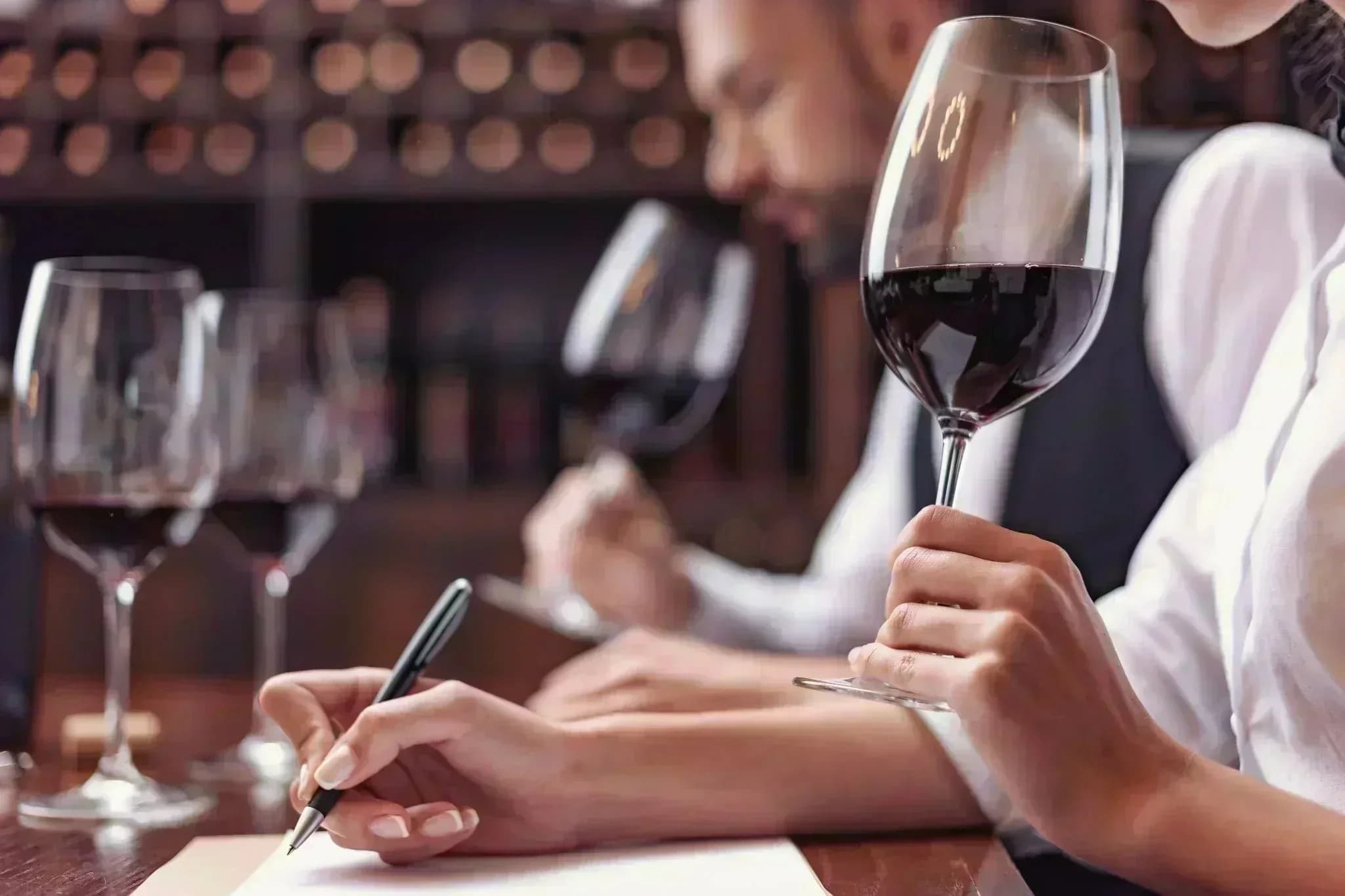
Swirling and smelling the wine releases layers of aroma that reveal its origin, grape, and winemaking style. Identify fruit, floral, spice, and earthy notes to train your nose.

How to smell wine

  1. Take a gentle sniff first: Before swirling, bring the glass to your nose and inhale lightly. This captures the most delicate aromas.
  2. Swirl slowly: Rotate the glass in small circles to release more aromatic compounds, then smell again.
  3. Smell in short sniffs: Several quick inhales are easier on your nose than a single deep breath and help you detect subtle layers.
  4. Identify the main family: Ask yourself whether your first impression is fruity, floral, spicy, herbal, mineral, or earthy.
  5. Let the wine develop: Set the glass down and return after a few minutes. New aromas may appear as the wine warms and takes in oxygen.

The layers of aroma

Thinking in layers helps you understand where aromas come from and how the wine has evolved.

  • Primary aromas: These come from the grape and the growing conditions. They include fruits, flowers, and herbs, such as citrus, stone fruit, berries, white flowers, or fresh herbs.
  • Secondary aromas: These develop in the cellar through fermentation and aging on lees or in oak. Examples include bread dough, brioche, yogurt, butter, vanilla, toast, or smoke.
  • Tertiary aromas: These appear with bottle age. Notes of dried fruit, nuts, truffle, tobacco, leather, forest floor, or honey often signal a mature wine.

If you want a structured tool to explore aromas, you can use a flavor wheel that groups scents by family. For a detailed guide, you can refer to Asiavino’s wine flavor wheel.

Recognizing common faults

Not every unusual smell is a sign of quality. Some aromas indicate that a wine is not in ideal condition.

  • Wet cardboard or moldy cork: Often linked to cork taint.
  • Vinegar, nail polish remover: Signs of excessive volatile acidity.
  • Burnt matches, strong rubber: Reductive aromas that may fade with air, or indicate a more serious issue.
  • Cooked fruit, stewed notes: Possible heat damage from poor storage.

Learning to distinguish faults from normal complexity helps you trust your nose and decide when a bottle is no longer at its best.

Step 3: Taste

Tasting brings together flavor and structure. You are now looking for sweetness, acidity, tannins, body, and length, and how all these elements interact from the first sip to the final impression.

Tasting explores structure, balance, and texture. Notice sweetness, acidity, tannins, and body, and observe how flavors evolve from the first sip to the finish.

How to taste

  1. Take a small sip and let it coat your whole mouth.
  2. Gently move the wine around your tongue and cheeks to activate different taste receptors.
  3. Notice how the flavor changes from the first contact to the moment you swallow or spit.
  4. After swallowing or spitting, focus on how long the flavors remain.

The three tasting phases

Professionals often divide the experience into three moments to describe how a wine moves on the palate.

  • Attack: The first impression. Pay attention to acidity, sweetness, and warmth from alcohol. Is it crisp and refreshing, soft and rounded, or rich and generous?
  • Mid palate: The point where structure and texture become clear. Notice the body, concentration, and flavor complexity. Ask whether new layers appear or the wine stays simple.
  • Finish: The lasting impression after you swallow or spit. Count the seconds until the flavors fade and notice whether the aftertaste is clean, bitter, drying, or pleasantly persistent.

Try describing each phase separately, for example: “zesty attack, silky mid palate, long mineral finish”. This simple habit trains precision.

The elements of structure

Structure is the architecture of the wine. Once you recognize these elements, you can compare styles and assess quality more clearly.

  • Sweetness: Felt mainly on the tip of the tongue. Dry wines have almost no sugar, while off-dry and sweet wines feel softer and rounder. Sweetness softens acidity and bitterness.
  • Acidity: Creates freshness and makes your mouth water. High acidity brings energy and lift; low acidity gives a broader, softer impression. Acidity is key for food pairing and aging potential.
  • Tannins: Present mainly in red wines and some skin-contact whites. Tannins create a drying or gripping sensation on the gums and tongue. Fine tannins feel silky; coarse tannins feel rough or harsh.
  • Alcohol: Perceived as gentle warmth in the throat and chest. Well-integrated alcohol gives smoothness and body, while excessive alcohol can feel hot and unbalanced.
  • Body: The overall weight and density of the wine on your palate. You can compare it to milk: light body like skim milk, medium like whole milk, full like cream.
  • Balance: The harmony between all these elements. In a balanced wine, no single component dominates. High acidity may be balanced by fruit and sweetness; firm tannins can be balanced by ripe fruit and sufficient body.

Practice idea: Taste a crisp Sauvignon Blanc next to an oak-aged Chardonnay. Focus only on acidity, body, and texture. This contrast makes the structure easier to feel.

Types of Wine Tastings

Comparing wines side by side is the fastest way to sharpen your palate. Different tasting formats highlight different aspects of wine.

Horizontal tasting

A horizontal tasting compares wines from the same vintage but different producers or vineyards, revealing how microclimates and winemaking choices influence style.

A horizontal tasting compares wines from the same vintage, often from the same region or grape, but made by different producers or from different vineyards. This shows how climate, soil, and winemaking choices influence style and quality.

Vertical tasting

A vertical tasting focuses on different vintages of the same wine to show how weather, aging, and technique shape its evolution over time.

A vertical tasting focuses on several vintages of the same wine from one producer. It reveals how weather, aging, and evolution in the cellar shape the wine over time.

Blind tastings

In a blind tasting, the wine’s identity is hidden to encourage objective evaluation and sharpen sensory recognition without bias.

In a blind tasting, the bottle is concealed, but you may still know the theme, such as the grape variety, region, or vintage. This format removes the influence of labels and expectations while still giving you enough context to compare wines within a similar style. It is an excellent exercise for sharpening your senses, understanding structural differences, and noticing how producers interpret the same grape or region differently.

Double blind tastings

In a double-blind tasting, neither the grape nor the region is revealed. It challenges tasters to rely solely on structure, aroma, and balance to identify the wine.

In a double blind tasting, no information is provided at all. You do not know the grape, origin, producer, or vintage. This exercise requires a more systematic approach: analyze appearance, identify aroma families, evaluate acidity, body, tannins, and alcohol, then narrow down possibilities based on these clues. The goal is not necessarily to identify the exact wine, but to develop the ability to describe what you perceive without bias and recognize stylistic markers purely through sensory evaluation.

Practical setup tips

  • Use identical glasses for all wines.
  • Taste from lightest to fullest, dry to sweet, youngest to oldest.
  • Serve each wine at an appropriate temperature.
  • Provide neutral foods such as plain bread or crackers to cleanse the palate.
  • Cover bottles during blind tastings and reveal them only after all wines have been evaluated.

Practice and Train Your Palate

Like any skill, wine tasting improves with repetition and focused practice. The more wines you taste, the more reference points you build in your mind.

Regular tasting, structured practice, and guided classes help build confidence and sharpen your palate over time.

Simple ways to practice

  • Keep a tasting journal: Write short notes for each wine: color, main aromas, structure, and finish. Over time, this record shows how your perception evolves.
  • Taste with friends: Open several bottles and compare impressions. Others may notice aromas or textures you missed, and describing wines aloud strengthens your vocabulary.
  • Control your variables: Taste wines from the same grape and vintage but different regions or producers. Then reverse it and taste different vintages of the same wine. This isolates the effect of place and time.
  • Join guided tastings or classes: Professional courses and local tastings provide a clear framework and expert feedback.
  • Train with real ingredients: Smell herbs, spices, fruits, coffee, tea, and flowers. Building a mental library of non-wine aromas makes it easier to recognize them in the glass.
  • Respect your limits: Palate fatigue is real. Take breaks, drink water, and pace yourself, especially during large tastings.

If you prefer a clear structure for your notes, you can use our printable wine tasting sheet. It guides you through appearance, aromas, and palate step by step, making it easier to compare wines and track your progress over time.

Above all, remember that the best way to learn is to taste often and with intention. You do not need to find perfect words. You only need to notice what changes from one wine to another.

Recognizing Quality

Quality is not only about price or reputation. With practice, you will start to see recurring traits in wines that feel particularly well-made.

  • Complexity: Several aromas and flavors that develop in the glass instead of staying one-dimensional.
  • Balance: All structural elements feel in harmony, with nothing sticking out.
  • Length: Flavors and sensations linger pleasantly after you swallow.
  • Intensity: Clear, defined flavors that are expressive without feeling heavy.
  • Typicity: The wine clearly reflects its grape and origin, rather than feeling anonymous.

These criteria are guides, not strict rules. Personal taste still matters, but understanding why a wine feels “complete” helps you make more confident choices.

Troubleshooting Common Mistakes

Small habits can limit what you perceive in a wine. Avoid these common issues to get the most from each glass.

  • Wearing strong perfume or scented lotion while tasting.
  • Overfilling the glass so you cannot swirl comfortably.
  • Holding the bowl instead of the stem, which warms the wine too quickly.
  • Using glasses with detergent residue or strong odors.
  • Tasting next to a kitchen, an open trash bin, or any strong smells.

Correcting these details brings the focus back to what matters: the wine itself.

Enjoy the Journey

Tasting wine is not about memorizing fixed answers. It is about training your senses and building your own language to describe what you enjoy. Every bottle captures decisions in the vineyard, choices in the cellar, and the character of a specific place and year.

By following a simple method - look, smell, taste, understand structure, and compare - you will quickly feel more confident in front of any glass.

Trust your senses, stay curious, and let every new wine teach you something. Over time, tasting becomes second nature and one of the most enjoyable parts of your wine journey.

Previous
The Origins and History of Wine
Next
How Wine is Made: From the Vineyard to your Glass in 6 Steps

Leave a Comment

Your email address will not be published.

From Theory to Taste: Explore These Wines

Luigi Bosca Extra Brut

Luigi Bosca Extra Brut

Alcohol
75 cL
|
12.2%
A golden sparkle of freshness and elegance, Luigi Bosca Extra Brut shines on every occasion.
Luigi Bosca Brut Nature

Luigi Bosca Brut Nature

Alcohol
75 cL
|
12.0%
Pure elegance in every bubble, Luigi Bosca Brut Nature, vibrant and refined for every celebration.
Luigi Bosca Bohème Brut Nature

Luigi Bosca Bohème Brut Nature

Alcohol
75 cL
|
13.2%
Elegant sparkling from high-altitude Chardonnay & Pinot Noir, with fine bubbles and a crisp finish.
97
Descorchados
96
DWWA
96
Vinous
97
Jeb Dunnuck
95
Tim Atkin
Outstanding
Cellar Worthy
Luigi Bosca PARAÍSO

Luigi Bosca PARAÍSO

Alcohol
75 cL
|
14.6%
The flagship of Luigi Bosca, crafted from Mendoza’s finest terroirs and 120 years of legacy.
97
DWWA
95
IWC
94
Vinous
93
Wine Spectator
93
James Suckling
96
Tim Atkin
Outstanding
Cellar Worthy
Luigi Bosca Finca Los Nobles Vistalba Malbec DOC

Luigi Bosca Finca Los Nobles Vistalba Malbec DOC

Varietal
94% Malbec, 6% Petit Verdot
Alcohol
75 cL
|
14.3%
An icon of Vistalba, where century-old vines craft Malbec of elegance, depth, and timeless allure.

Learn About Wine

Become a Wine Expert

A sommelier decants and pours red wine gently to enhance aeration, soften tannins, and reveal deeper aromas.

The complete guide to essential wine accessories

A practical guide to the best wine accessories for opening, serving, and preserving bottles. Learn how each tool works and how it improves your wine experience.
A man in a suit holding a wooden wine gift box with a bottle of red wine inside.

Gifting Wine: How to Choose the Right Wine for Someone Else

A complete guide to choosing the right wine gift. Discover how to match wine to the person, the occasion, and the message you want your gesture to express.
Two Asian women enjoying wine together while grilling fresh prawns on an outdoor table, sharing food and conversation in a relaxed and warm atmosphere.

How to Pair Wine with Asian Seafood, Sushi and Raw Dishes

Asian seafood dishes such as sushi, sashimi, tempura, and grilled fish offer refined textures and subtle flavors. This guide provides simple principles and practical wine pairing ideas that bring balance, clarity, and freshness to every...