
How to Taste Wine and Train Your Palate
Explore the art of wine tasting and learn how to observe, smell, and taste like a professional. Understand how each sense reveals the balance, structure, and quality of a wine.
Asia's home for great wine

New Latitude Wines are crafted outside the 30-50° wine belt. Discover how winemakers adapt to tropical heat and northern cold to create distinctive wines in emerging regions.
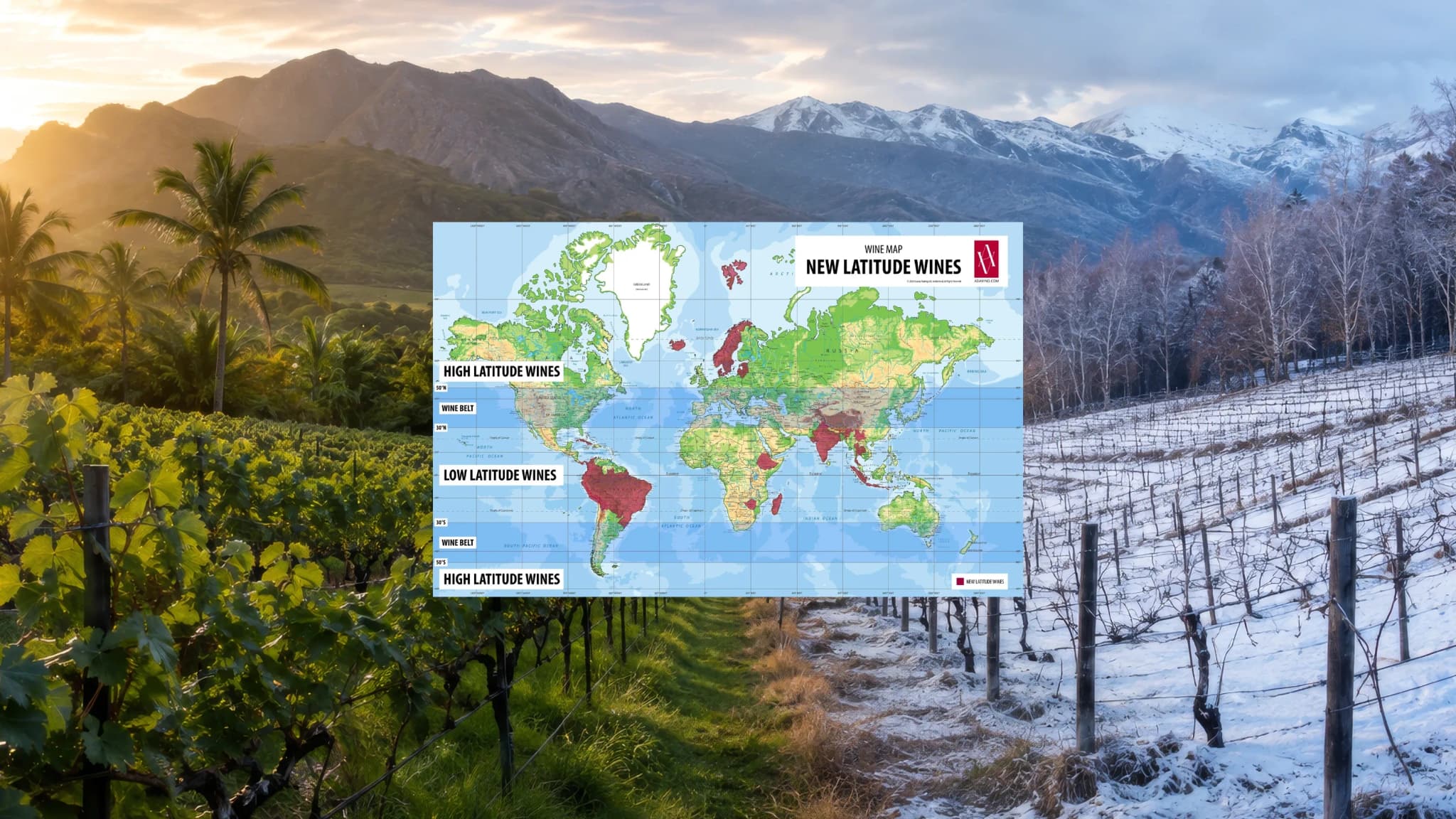
New Latitude Wines are wines produced outside the traditional 30-50° latitude belt, in regions once considered too hot, too cold, or too humid for viticulture. Through modern vineyard management, adapted grape varieties, and precise climate control, winemakers in new latitude regions are proving that quality wine can emerge far beyond the world’s classic vineyards.
These wines come from regions beyond the classic wine belt, which lies between 30° and 50° latitude in both hemispheres. They are often divided into two groups:
Countries such as Thailand, Indonesia, Vietnam, Norway, and Denmark are at the forefront of this new movement, each finding creative ways to cultivate grapes where the climate was once considered impossible.
For centuries, winemaking was defined by two broad categories: Old World and New World wines.

Both categories lie mostly within the 30°-50° latitude range, known as the classic wine belt. This range provides the right balance of sunlight, rainfall, and temperature for grapes to ripen naturally.
Most grape varieties require a specific level of accumulated warmth, measured as growing degree days (GDD), typically between 1,200 and 1,700 GDD based on a 10 °C (50 °F) base temperature. This accumulation of heat enables vines to grow, flower, and produce ripe fruit with balanced sugars and acidity.
In recent decades, winemakers have begun planting vines outside the classic wine belt that lies between 30 and 50 degrees latitude. Driven by climate change, technological innovation, and curiosity for new terroirs, grape cultivation is expanding into regions once considered unsuitable for consistent ripening and quality production. Wines from these pioneering regions are known as New Latitude Wines.

New latitude viticulture requires rethinking every stage of grape growing and winemaking. Producers must adapt to environments that traditional regions rarely face:
Despite these obstacles, winemakers across Asia, northern Europe, and parts of South America are proving that climate and geography no longer define the limits of great wine. Through innovation, adaptation, and scientific precision, they are redefining what is possible for the future of wine.
Low Latitude Wines represent some of the most exciting developments in global viticulture. Found in tropical and subtropical climates, they demonstrate how science and adaptability can turn environmental challenges into opportunities.

Thailand is Southeast Asia’s pioneer in tropical winemaking, with vineyards in Khao Yai and Hua Hin Hills. Grapes such as Malaga Blanc and Shiraz are managed with canopy shading and careful drainage to withstand heat and monsoon rains. The wines are bright, fruit-forward, and uniquely expressive of their environment.
Indonesia’s wine industry centres on Bali, where producers like Hatten Wines grow Muscat family grapes that thrive in warm, humid conditions. Although production remains small, these wines are gaining attention for their freshness and technical precision.
Vineyards in Maharashtra and Karnataka form the heart of India’s wine scene. With climates that sometimes allow two harvests per year, winemakers cultivate Shiraz, Sauvignon Blanc, and Chenin Blanc, using controlled irrigation and canopy systems to maintain grape balance.
In Ninh Thuan and Da Lat, Vietnam’s vineyards sit between tropical lowlands and cooler highlands. Hybrid grape varieties and innovative trellising systems help control humidity and sun exposure, producing wines with vivid aromas and refreshing acidity.
High Latitude Wines are produced above 50 degrees latitude, primarily in northern Europe. These regions experience long daylight hours in summer and low disease pressure, but short growing seasons and the constant risk of frost.

Denmark was the first Scandinavian country to develop a wine industry and now hosts over 50 vineyards. Producers focus on white, sparkling, and dessert wines made from Riesling, Pinot Blanc, and Müller-Thurgau, known for their clean and delicate character.
Sweden grows Rondo, Merlot, Pinot Noir, and Chardonnay, crafting both red and white wines that reflect the country’s cool climate elegance. While alcohol regulations limit direct sales, winemaking education and quality standards are strong.
Norway produces mainly white wines from Riesling, Müller-Thurgau, and Vidal, with some vines grown in greenhouses to extend ripening. The country is home to the world’s northernmost vineyard at 61.2° N, showcasing how far viticulture has evolved.
The rise of New Latitude Wines marks an important evolution in the global wine landscape. From Southeast Asia to Scandinavia, these regions demonstrate that innovation and sustainability can overcome even the harshest climates. Scientists and winemakers continue to develop grape varieties resistant to heat, cold, and disease, ensuring consistent quality harvests in new environments.
As these wines gain recognition, they are expanding the definition of where wine can come from, adding diversity and creativity to the modern wine world.
Explore the art of wine tasting and learn how to observe, smell, and taste like a professional. Understand how each sense reveals the balance, structure, and quality of a wine.

Master the essentials of wine cellaring: temperature, humidity, inventory, and selection to protect your wines and enjoy them at their perfect peak.

A practical, modern guide to choosing wines that elevate your dinner party. Explore pairing principles, spice levels, regional matches, and a simple lineup that suits any menu.