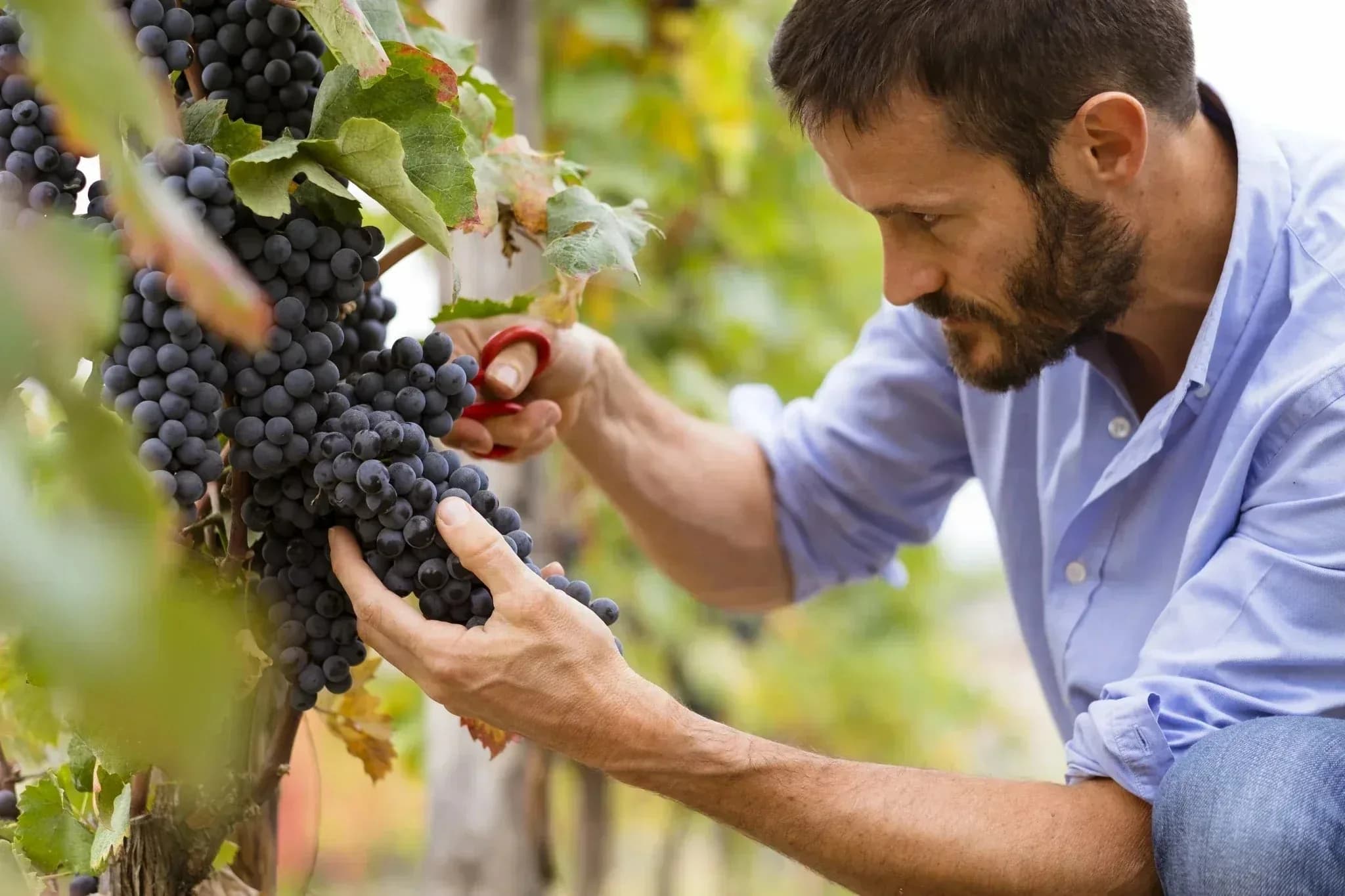
Man inspecting grape clusters on a vine in a vineyard.
Learn About Wine

How Wine is Made: From the Vineyard to your Glass in 6 Steps

Wine is one of humanity’s oldest and most fascinating creations, born from the meeting of nature, patience, and craftsmanship. Although it begins simply with grapes, the path from vine to bottle involves a series of careful steps that shape the taste, aroma, and character of every wine.

This guide explores how grapes become the beautiful drink we call wine.

1. Cultivation: Where It All Begins

The story of wine starts in the vineyard. The cultivation of grapes is the foundation of quality winemaking, as no process can improve fruit that is poorly grown. Factors such as soil, sunlight, rainfall, and vineyard management all determine how the grapes will express their unique character. Healthy vines and balanced fruit are the first ingredients of excellence.

Vineyards are carefully maintained to produce healthy, balanced grapes.
Every great wine begins with quality fruit grown under ideal vineyard conditions.

2. Harvest: The Moment of Truth

The year printed on a wine label refers to the harvest, when grapes are picked at their peak ripeness. The ideal time to harvest depends on climate, grape variety, and desired wine style. Manual harvesting allows careful selection of each bunch, while mechanical harvesting ensures speed and efficiency. In both cases, the goal is to collect the best possible fruit at the perfect moment.

Grapes are hand-picked at full maturity to preserve freshness and flavour.
Harvest marks the moment when grapes reach their ideal ripeness, influenced by climate, variety, and wine style.

3. Crushing: Releasing the Essence

Once harvested, grapes are crushed to release their juice. Traditionally done by foot, this process is now carried out by modern presses that gently separate juice from skins and stems. The result is a fragrant liquid called must, which will soon begin to transform into wine.

Freshly harvested grapes are carefully sorted to remove imperfect fruit, stems, and leaves.
Grapes are gently separated from their stems and pressed to release the juice for fermentation.

4. Fermentation: The Magic Within

Fermentation is the natural process that turns grape juice into wine. Yeasts, either naturally present on the skins or added by the winemaker, convert sugar into alcohol and carbon dioxide. For red wines, the juice ferments with the skins to extract color and tannins. For white wines, the juice is usually separated before fermentation. Rosé wines spend only a short time in contact with their skins to achieve their delicate color. Once fermentation is complete, the young wine is clarified and prepared for aging or maturation.

The must is placed in vats where fermentation begins, transforming juice into wine.
During fermentation, the developing wine is regularly checked to guide its transformation.

5. Aging: Time Brings Character

Aging is the stage when wine develops complexity, texture, and balance. It may occur in stainless steel, concrete, or oak barrels, each giving a different influence on texture and aroma. During this stage, the wine rests, allowing its flavors to integrate and its structure to soften. The duration and vessel depend on the style the winemaker wants to achieve.

The young wine rests and matures in barrels or tanks, developing aroma, texture, and balance over time.
Ageing refines the wine, enhancing its complexity, smoothness, and balance.

6. Bottling: The Final Step

Before bottling, the wine is filtered and stabilized to ensure clarity and consistency. Some wines are bottled young to preserve freshness, while others continue to mature slowly inside the bottle. Once sealed, the wine is ready for transport, sharing, and ultimately, enjoyment.

Before bottling, the wine is filtered using methods adapted to its style and structure to achieve clarity and stability.
In the final stage, the finished wine is bottled, labelled, and prepared for release.

From the first leaf on the vine to the final sip, each stage reflects the dedication and precision of those who craft wine. It is a journey of care, time, and respect for the land.

Previous
How to Taste Wine and Train Your Palate
Next
A Complete Guide to the Primary Styles of Wine

Leave a Comment

Your email address will not be published.

From Theory to Taste: Explore These Wines

98
Descorchados
94
Vinous
93
Tim Atkin
96
Jeb Dunnuck
95
DWWA
Cellar Worthy
Outstanding
Luigi Bosca Filos Chardonnay

Luigi Bosca Filos Chardonnay

Grape Varieties
100% Chardonnay
Alcohol
750ml
|
12.6% vol.
A sharp, vibrant Chardonnay that captures the pure, elevated spirit of the Andes.
92
James Suckling
92
Wine Enthusiast
93
Vinous
92
IWC
Luigi Bosca De Sangre White Blend

Luigi Bosca De Sangre White Blend

Grape Varieties
50% Chardonnay, 35% Sémillon, 15% Sauvignon Blanc
Alcohol
750ml
|
13.6% vol.
A luminous white where floral elegance meets the vibrant soul of the Uco Valley.
94
DWWA
92
James Suckling
Luigi Bosca De Sangre Corte

Luigi Bosca De Sangre Corte

Alcohol
750ml
|
14.6% vol.
A bold and elegant harmony of Cabernet, Syrah, and Merlot, crafted to captivate from first sip to last.
92
Vinous
92
IWC
Luigi Bosca De Sangre Malbec Valle De Uco

Luigi Bosca De Sangre Malbec Valle De Uco

Grape Varieties
100% Malbec
Alcohol
750ml
|
14.5% vol.
A bold yet graceful Malbec, born from the heights and purity of the Uco Valley.
95
Descorchados
94
Vinous
92
Tim Atkin
Limited Edition
Luigi Bosca De Sangre Malbec Paraje Altamira

Luigi Bosca De Sangre Malbec Paraje Altamira

Grape Varieties
100% Malbec
Alcohol
750ml
|
14.5% vol.
From Altamira’s chalky soils, a vibrant Malbec with red fruit, floral notes, and pure minerality.

Learn About Wine

Become a Wine Expert

Sommelier examining a bottle selected for long-term aging in a wine cellar

Mastering Wine Aging: When to Cellar a Bottle and When to Drink It

Most wines are meant to be enjoyed young, but a select few become deeper and more complex with time. This guide explains how wine ages, which bottles to cellar, and how to store them properly.
Winegrowers in Ningxia carefully tending vineyard rows, pruning and training vines in the region’s arid continental climate.

China’s Most Common Wine Grape Varieties

Explore China’s most important wine grape varieties, from Cabernet Sauvignon to Marselan, and how they shape the country’s wine styles today.
Various wine styles displayed in different glasses, showing a range of colors from sparkling and white to rosé and red.

A Complete Guide to the Primary Styles of Wine

Discover the primary wine styles and what makes each one unique. From crisp whites to robust reds, rosé, orange, sweet, and fortified wines, this guide helps you choose and enjoy wine with confidence.